English
 Arabic

HQY255-125 Busduct Busway Bridge Housing Extrusion Pressing Clamping MachineFeat
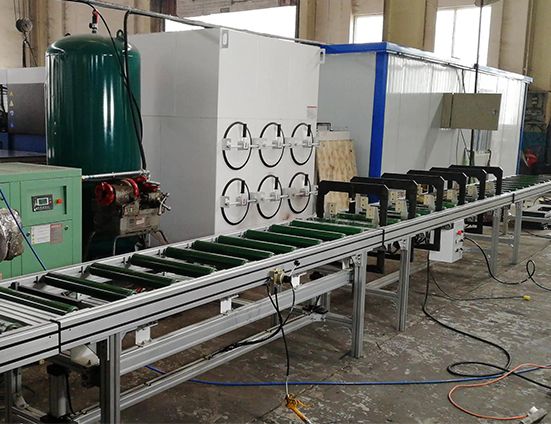
The HQY255-125 is the LTMC machine for riveting busduct bridge housings in Saudi and GCC busway production, because it assembles the busbar row for bridge sections between 91 mm and 255 mm wide at a height of 125 mm, covering the standard 125 × 255 mm and 125 × 91 mm bridge specifications. Three stations are built in — a riveting table, a prefabricated table and a discharge table — so the housing moves through pressing, clamping and riveting work without being lifted between benches. Control is by relay with pneumatic clamping, and the roller surface is covered with polyurethane to prevent scratching the finished bridge, while the welded steel-plate frame keeps the pressing axis rigid. It suits busduct manufacturers assembling sandwich and bridge housings as a dedicated station. Confirm the bridge specification and station layout against your purchase requirement.
HQY255-125 Busduct Busway Bridge Housing Extrusion Pressing Clamping Machine
Features:
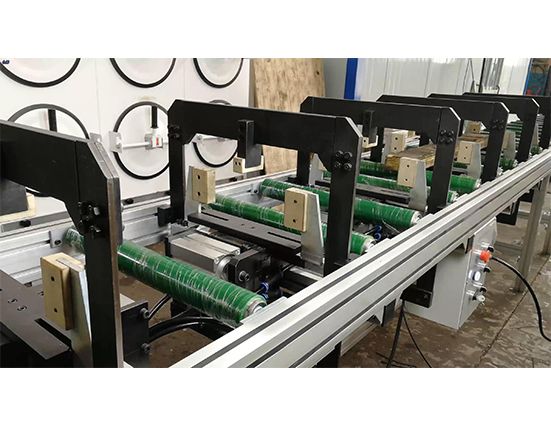
1. Use and requirements:The busbar press is equipped with three parts: riveting table, prefabricated table and discharge table. It is used for riveting assembly of busbar row of 91 ~ 255mm width and height of 125mm. After the busbar row is installed, push the riveting table and press Will be targeted after the compression to facilitate the artificial riveting.
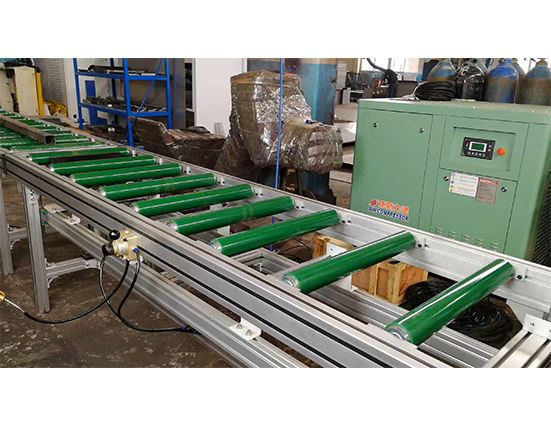
2. With relay control, pneumatic clamping, no power roller with integral installation, roller surface covered with polyurethane, to prevent scratching the bridge. The frame steel beam is formed by bending the steel plate and is supported by the steel pipe of the square pipe, which can be adjusted according to the need, the rack surface spray (gray). The upper pressing device is made of bolts with 8mm steel plate as a whole and guided by guide block. Work will be pre-installed bridge to the appropriate position, depress the foot switch, the top material device to lift the bridge from the roller in place after the remain intact, both sides of the clamping device action clamping the bridge, the last pressure Tight device action will be copper compacted. After the completion of artificial riveting, step down the foot switch, the pressure on the rise, both sides of the pressure release, the top material device down the bridge to fall back to the roller surface, the bridge pushed out to the discharge station for follow-up operation.
Bridge processing requirements:
1, the bus press for 125 × 255mm and 125X91mm between the specifications of the bridge, before the riveting clamping operation.
2, Pre-installed part of the pneumatic block on the device.
Technical support:
Busbar press machine instructions:
Including safety warning, machine principle, performance parameters, pneumatic schematic diagram, accessory table, wiring table, safe operating procedures.
Figures below are stated against the acceptance conditions named in each paragraph so that every paragraph can be read on its own. Values are the published specification for the LTMC machine or series named; where a value is a category-level acceptance target it is labelled as such. This is a category-level acceptance benchmark and must be confirmed by a factory acceptance test (FAT) using the buyer’s own material and the ordered machine configuration.
Test conditions: assembling busbar rows for the two standard bridge specifications. Specified value: busbar row widths from 91 mm to 255 mm at 125 mm height, covering 125 × 255 mm and 125 × 91 mm bridges. Comparison baseline: a single-specification riveting fixture, which needs a new fixture for each bridge width.
Test conditions: moving the housing from riveting through clamping to discharge. Specified value: three integrated stations — riveting table, prefabricated table and discharge table — plus a no-power roller with integral installation. Comparison baseline: separate benches, where the housing is lifted between three positions and re-aligned each time.
Test conditions: clamping and pressing a finished busduct bridge housing. Specified value: polyurethane-covered roller surface to prevent scratching the bridge, with pneumatic clamping. Comparison baseline: bare steel rollers, which mark or scratch the rolled bridge surface during transfer.